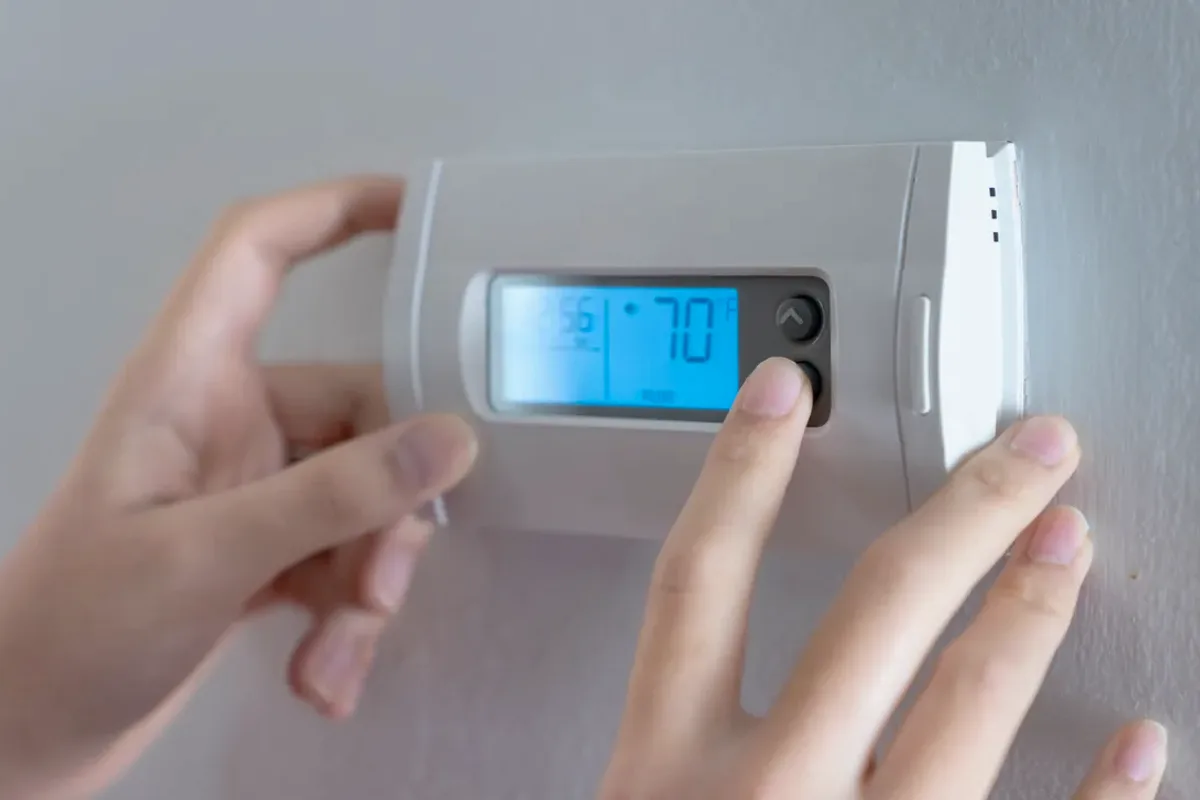
Request thermostat repair & replacement for a property in Norfolk. Include the equipment, the problem or planned work, and your location so the request can be reviewed.
Does the thermostat show an incorrect temperature, fail to respond, or control the system inconsistently?
A thermostat problem can arise from a drifting sensor, an unsuitable location, a display or control fault, or incompatibility with the equipment it operates. The connected system matters: a thermostat for a furnace, boiler, or mini-split may have different control requirements. An assessment should compare displayed temperature and control behaviour with measured conditions and equipment response. Repair may suit a specific fault, while replacement may be needed when the device cannot provide the required functions or work with the system.
Assessment should record thermostat model, location, displayed temperature, control settings, and the connected equipment’s response. A sensor or placement issue differs from a device fault or a compatibility problem, so testing should establish which applies. If replacement is considered, the proposed thermostat’s wiring and control features must match the system. These details help distinguish a repairable issue from a replacement need without assuming the thermostat caused every comfort symptom.
Temperature sensing, calibration, and thermostat placement
Thermostat faults and control response
Programmable or smart replacement and equipment compatibility
Assessment and Scope
Questions for the Proposed Work
01
Check sensing, location, and control behaviour
A temperature reading that differs from room conditions may relate to sensor condition or thermostat placement, but a comparison is needed before recalibration or replacement. Direct sun, drafts, or nearby heat sources can influence what a device senses, depending on its position. The assessment should also record whether the thermostat calls for heating or cooling and whether the connected equipment responds. That evidence separates a sensing issue from a problem elsewhere in the control sequence.
02
Repair a diagnosed thermostat fault
Repair is a distinct option when inspection identifies a fault that can be corrected, such as a sensor or device issue, and the thermostat remains suitable for the system. A display problem or inconsistent control should not automatically be attributed to wiring or the heating equipment without testing. The proposed work should name the fault and explain how it was identified. Internal electrical checks and wiring work belong with service personnel, not occupants.
03
Replace only after checking compatibility
A replacement may be appropriate when the existing thermostat cannot support the connected equipment or required control functions. Before selecting a programmable or smart model, confirm compatibility with the furnace, boiler, or mini-split and identify any control features the system needs. The installation scope should specify the device and functions included, such as scheduling or remote access if supported. This avoids choosing a thermostat based only on its display or advertised features.
Compare the next step
Have the owner test normal local scheduling and remote permissions before departure. Ask what happens if internet service or device batteries fail and who receives useful notifications. Document the equipment-compatible settings and access arrangement so another authorized person can respond without guessing at the control configuration.
Thermostat wiring is not universal. Do not connect wires by colour alone or work on energized wiring; a compatible control must be configured for the equipment it serves.