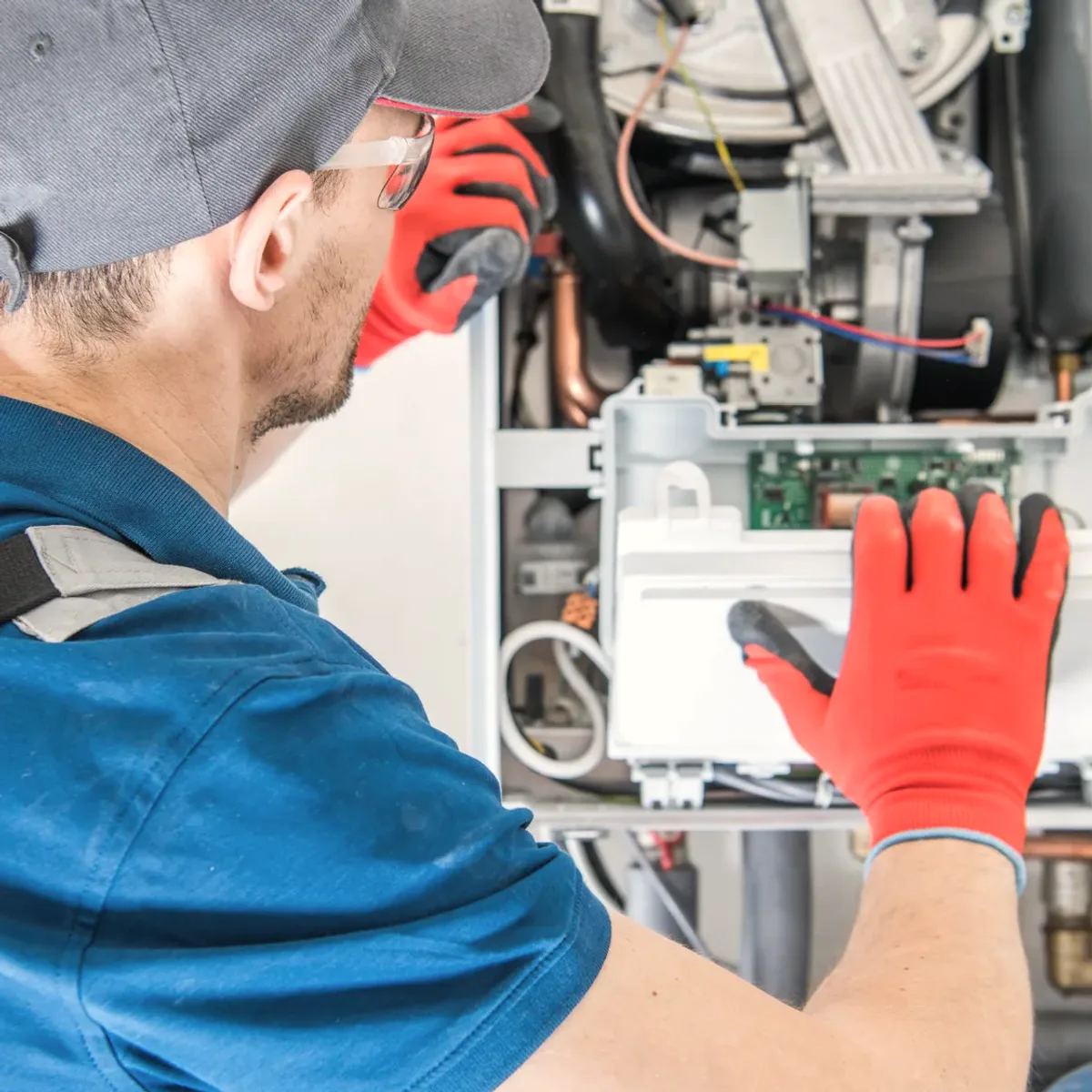
Request boiler service for a property in Norfolk. Include the equipment, the problem or planned work, and your location so the request can be reviewed.
Is the boiler failing to ignite, losing pressure, leaking, or leaving radiators or floor loops cold?
Boiler work depends on both the fuel and the hydronic distribution system. A natural-draft cast-iron boiler serving radiators has different venting and operating details from a condensing boiler connected to in-floor loops. Repair should identify whether a symptom involves ignition, circulation, pressure, leakage, or controls. Installation requires a separate assessment of boiler type and system compatibility, while maintenance follows manufacturer instructions and inspection findings rather than an assumed routine procedure.
Assessment should record fuel, boiler type, vent arrangement, pressure readings, ignition behaviour, and whether the distribution is radiators or in-floor loops. An ignition fault differs from a circulator or pressure-control problem, and a venting concern differs from an enclosure issue. These observations affect both repair scope and installation compatibility. Inspection findings, equipment condition, and repair history help distinguish maintenance, repair, and replacement decisions.
Gas, propane, and oil boiler repair and maintenance
Natural-draft cast-iron and condensing boiler installation distinctions
Radiators, in-floor hydronic loops, ignition, circulation, pressure, and venting
Assessment and Scope
Questions for the Proposed Work
01
Separate ignition, circulation, and pressure faults
A boiler that will not ignite needs a different diagnosis from one that fires but fails to circulate heat. Inspection should distinguish burner or ignition operation from circulator function, pressure readings, leaks, and related controls. Cold radiators or floor loops alone do not identify the cause. Recording the observed sequence and affected distribution helps target repair and avoid treating a pressure or circulation problem as an ignition fault. Boiler safety controls should not be adjusted or bypassed by occupants.
02
Match boiler type to venting and distribution
A natural-draft cast-iron boiler serving radiators and a condensing boiler serving in-floor hydronic loops have distinct venting, piping, and control considerations. If replacement is being considered, the assessment should document the existing vent route, boiler enclosure, distribution temperatures and controls, and system configuration. Gas, propane, and oil equipment also have fuel-specific requirements. These details matter because a proposed boiler must suit both its installation conditions and the hydronic system it serves.
03
Keep maintenance, repair, and replacement distinct
Maintenance should follow the boiler manufacturer’s instructions and inspection findings, including checks appropriate to the burner, venting, controls, and pressure-relief components. Flushing is not an automatic step; whether it is suitable depends on the system and findings. Repair addresses a diagnosed fault, while replacement is a separate comparison informed by condition, repair history, and compatibility. Ask for the observed issue and proposed work to be explained before deciding among these options.
Compare the next step
Ask how the installed boiler and zone controls should operate during the absence, including any freeze-protection requirements in the manufacturer instructions. Establish who can respond to an alarm or loss of heat and provide that person with equipment and access records. Monitoring should support a practical service arrangement rather than stand in for maintained heating equipment.
Leave fuel, combustion, electrical, and pressure-system work to a qualified contractor. Do not adjust safety devices or repeatedly add water to a system with an unexplained leak or pressure loss.